

Feng-E Technology Shares AI Decision-Making Experience at DA Digital Intelligence Conference 2024

November 4, 2024
Source:Xian Ning News
On October 25, the DA Digital Intelligence Conference 2024 (Shenzhen) was held. Centered on the theme "Large Models Unleashing Business Value from Data," the conference targeted big data and AI practitioners, research scholars, and corporate executives. It shared the latest trends in the fields of big data and large models, showcased innovative achievements and application cases in "AI+," and discussed the deep fusion of data and artificial intelligence, aiming to assist various industries in reaching new heights of intelligence and digitalization.
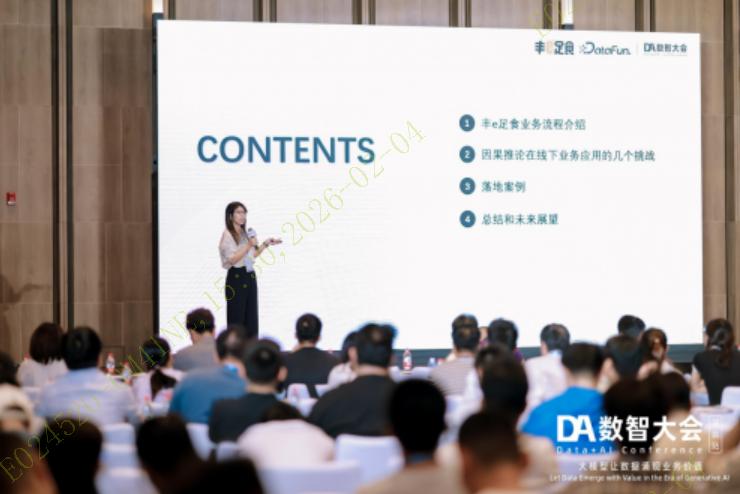
As an invited representative and a leading enterprise among domestic unattended retail operators, Feng-E Technology shared its latest technological achievements in exploring digital intelligence applications for new retail. As one of the earliest enterprises in the domestic unattended retail industry to apply artificial intelligence, Feng-E Technology has invested heavily in algorithms and technological R&D. The company has taken the lead in achieving full-process digital management, with algorithmic decision-making covering the entire lifecycle—from consumer insights, replenishment, and product selection to back-end logistics dispatching, inventory turnover, and shelf-life management.
In the "Intelligent Analysis and Decision-Making" sub-forum, Yang Si, Senior Data Science Manager of the Data and Algorithm Department at Feng-E Technology, delivered a keynote speech titled "The Application of Causal Inference in the Unattended Retail Industry." She noted that while causal inference has accumulated a wealth of best practices and application cases in the internet sector, offline businesses and traditional industries also face many strategic choices that require causal inference for decision-making. However, these application scenarios are unique, and there is currently a lack of relevant reference materials within the industry.
She stated that applying causal inference to offline retail often encounters challenges such as small sample sizes and high volatility in indicators; therefore, ensuring balanced samples in randomized groupings is crucial. Furthermore, the difficulty of execution is high. Unlike the internet sector, the implementation of strategies requires human action, which leads to coordination issues between the business and algorithm sides, differences in workload and profit distribution between experimental and control groups, and a potential for higher decision coupling. She shared practical cases of how Feng-E Technology utilizes causal inference and A/B testing to improve decision accuracy during its digital intelligence development, along with response strategies for various challenges.
Industry experts pointed out that significant challenges remain for enterprises in applying algorithmic decision-making. These decisions rely heavily on data; quality decisions require accurate data and correct models. However, some data is inherently unknowable to algorithms, which is an unavoidable problem. Additionally, many corporate cultures lean toward manual decision-making; convincing business units that algorithms can outperform human experience is a difficult task. Algorithms generally optimize for the "global picture" and the company’s overall interests; if these conflict with specific business unit metrics, management must make a trade-off.
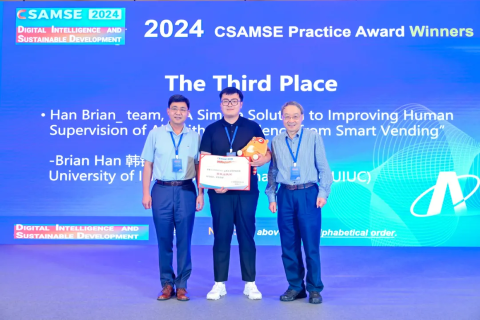
To date, Feng-E Technology’s Smart Market scale has exceeded 140,000 units, with a service network covering more than 70 core cities nationwide, making it the largest unattended retail service provider in China. In recent years, Feng-E Technology’s digital intelligence construction has undergone a technological evolution: "Pure Manual Decision-making Algorithmic Decision-making Algorithm-led + Human-assisted." The company has iterated from "Strong Human, Weak Algorithm" to a "Strong Algorithm, Weak Human" AI+human collaborative decision-making mechanism. This innovation won the CSAMSE 2024 "Management Science Practice Award" from the China Society of Management Modernization. It not only provides a demonstration case for successfully applying AI for effective decision-making in a real commercial environment but also showcases the commercial value of AI in the retail industry to the wider sector.
"Feng-E Technology is a national self-operated brand, allowing for strong control over every operational link in our management. This has facilitated a smooth push for business departments to adopt algorithmic decisions, and we have now achieved refined operations for 'near-field' retail in micro-scenes," said Yang Si. To ensure the validity and accuracy of the "Algorithm-led + Human-assisted" mechanism, Feng-E Technology’s solution is to rely on A/B testing. For example, by setting up experimental group comparisons, different strategy versions are deployed under identical conditions. The effectiveness of a plan is then evaluated by comparing quantitative results such as sales conversion rates and inventory health indicators. Implementation follows a progressive promotion strategy: small-scale pilots are conducted to observe performance in real environments before gradually expanding the scale to ensure a stable transition.
Yang Si emphasized that enterprises must pay attention to the adaptability of algorithms. When facing atypical events, such as holiday promotion peaks, algorithms must possess the ability to quickly adjust parameters, combined with real-time monitoring and human intervention for a flexible response. To improve adaptability, technology must periodically iterate and update models, incorporating the latest market data and user feedback to ensure that algorithmic decision logic always stays closely aligned with changes in market demand.
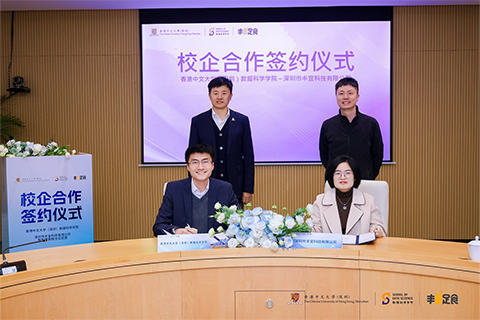
 Shenzhen Feng-E Technology Group Inc.
1401 Kangtai Group Tower, 222 Kefa Road, Science and Technology Park Community, Yuehai Subdistrict, Nanshan District, Shenzhen
Nanshan District, Shenzhen, China
